4th April 2022
Like many of the other home appliances you depend on every day, water softeners require consistent maintenance to ensure proper performance.
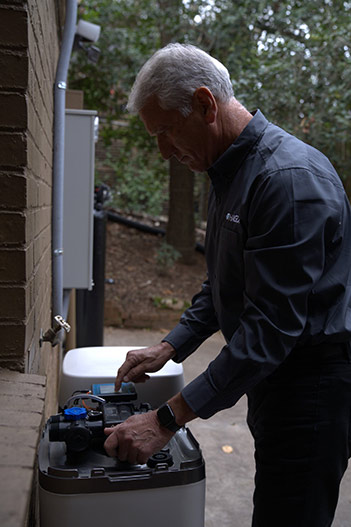
Upon installation, your local authorized dealer will configure your water softener or WaterMax conditioner to be set on a regeneration cycle that meets the needs of your household. Correct setup is the first step in achieving dependable performance, so they will learn a lot about what is in your water and how much your family typically uses in a day to find the best settings for you. From there, the owner must provide salt as recommended to maintain its performance.
Additional maintenance required beyond salt replenishing will depend on the type of water softener or conditioner you have. When problems occur, a system service call should be scheduled as soon as possible to prevent issues from worsening.
Problems with water softeners can occur, just like any other mechanical equipment, you may own. Depending on the design of your water softener or conditioner and how dedicated you are to proper maintenance, you may never experience any water softener problems.
Here are some water softener issues that may occur:
Salt Bridges
Problems with your water softener or conditioner may go undetected until you notice the water quality has become unacceptable, or as it was before you had your water softener installed. One such issue is the development of a salt bridge.
A salt bridge can form in the brine tank of the softener, where the brine solution is created for the regeneration process. The bridge is a hard, crusty layer of salt that forms across the interior of the tank, creating a solid barrier that prevents the salt that is added to the tank from reaching the water that needs to be treated.
Salt bridges can be prevented with proper use and care when you add salt to your system. Here are three tips to keep in mind to prevent salt bridges:
Channelling
Channelling or tunnelling happens in a water softener tank when the water does not flow through the whole bed of the water softener tank. It can be the result of the water flow rate being too low for the size of the softener tank. The hard water creates a path or channel through the resin that has become oversaturated with mineral ions. Channelling results in the inefficient use of the resin and poor water softener system performance.
The issue of channelling is mostly a matter of the design of the water softening system. Conventional water softener designs tend to be prone to this issue. At Hague Quality Water, we have engineered a baffle that helps evenly distribute the incoming water across all the resin inside to ensure your water receives the level of treatment you have come to expect. Make sure the flow rate is correctly set to help prevent this issue.
Compromised Filter
With some types of water softeners and conditioners, a common performance problem may be the result of a compromised or dirty filter. Some water softeners use filters at the start of the process to remove large particles. These filters deal with more sediment than do the other components of the softener, so they become used up more quickly.
If your water softener requires filter changes, you will need to keep up to date with filter replacement maintenance to make sure your water softener functions properly. Some water softeners have no filter included at all, which means those particles can get stuck in the working mechanisms inside your system. That would also result in places that would require regular maintenance and cleaning to keep the system working properly.
With a Hague WaterMax water conditioner, it includes resin to soften your water as well as customizable filter chambers. These areas can collect particles that rinse away into the drain without needing frequent and costly filter changes.
Hague water softeners are engineered to prevent problems from occurring. They are based on up-flow soft water regeneration for more effective use of the water softener resin. This design ensures that the water is distributed more evenly through the resin bed to optimize the use of all the resin and prevent channeling.
Another thing that makes Hague water systems design unique is the use of “fine mesh” resin beads. Since the sodium ions attach to the surface of the resin, the more resin beads that meet the water, the more effective and efficient the cycle becomes, reducing the stress on the resin beads. Fine mesh resin is much smaller, so more beads can be fit in tightly packed spaces than regular resins. Hague’s unique vacuum packing process ensures that all our water softener models have the greatest capacity for hard water treatment in the smallest space possible.
Hague water softeners are also designed to simplify maintenance. For example, the WaterMax is very efficient, requiring very little water and salt to operate. It also has an optional audible salt alerts feature so you know exactly when to add more salt. It also has a built-in, self-cleaning filter that never needs to be replaced.
Contact one of our authorized Hague dealers to discuss how we can meet your water treatment needs!
Questions? Your local Hague Water dealer can help!
After submitting your details, here’s what will happen next: