
1. Blog
  2. »
  3. How to prevent limescale in kettle

How to prevent limescale in kettle

Take the first step to Softer water

2nd July 2020

A cup of Tea with the Great British flag in the background Tired of dealing with limescale in your kettle? The white residue that you can often see is the limescale in the kettle, caused by hard water.

Is limescale in your kettle bad for you?

Kettle limescale can not only spoil your drink but also shorten the life of your kettle, eating away at the elements and creating corrosion. Luckily, limescale can be removed, but you need to identify the causes to know how to stop kettle limescale. So, what causes kettle limescale? 

What causes kettle limescale?

Limescale in your kettle is caused by hard water, which is rich in minerals such as calcium and magnesium. To test if you have hard water, try a quick home soap lather test. Put a small amount of soap into a water bottle and fill it halfway with water. Shake the bottle vigorously.

If you have frothy, bubbly water, chances are you have soft water. If you have cloudy milky water and dull bubbles most likely you have hard water. If you suspect you have hard water, you can get a more advanced water test kit at any DIY store to check the accurate hardness of your water.
Check out our water softeners

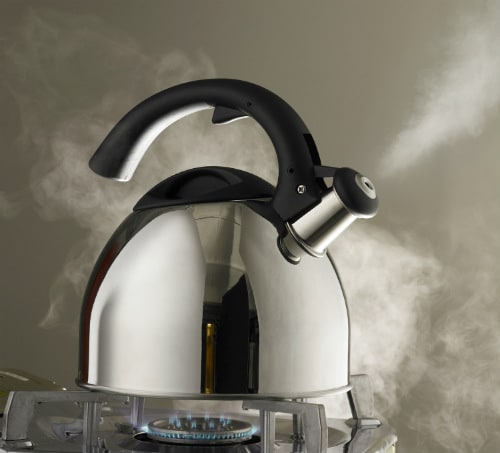
A kettle boiling on a stove, potentially creating kettle limescale

How to prevent kettle limescale?

If you have already spotted residue forming and would like to remove kettle limescale, there are some simple (yet temporary) fixes to cleaning the residue out. You can clean your scale in the kettle with vinegar, by boiling the kettle with a solution of ½ vinegar and ½ water, and then giving the areas with kettle limescale a scrub. You can also use citric acid, like lime juice, or baking soda. However, remember, descaling your kettle does not prevent limescale from reappearing. 

There is also a misconception that using bottled water can help in preventing limescale – this is false, as bottled water still contains minerals. The environmental effect plastic bottles have also needs to be considered, so having soft water is the best long-term problem solver. 

If you are looking for a more convenient, long-term solution, you should consider purchasing a water softener, which will transform hard water into soft water by removing problematic minerals from the water and reducing build-up. Soft water also improves the taste of your drinks, as hard water often has an unpleasant metallic taste – this is an added benefit! 

Kettle limescale can be a bigger problem

Kettle limescale on your taps is often the most obvious symptom of a bigger problem caused by hard water in your house. Soft water will also help prevent white stains on your dishes and glassware, and prolong the life of other home appliances that use water, such as such as your coffee maker, dishwasher, iron, washing machine, water heater and so on.

Read more advantages of soft water


Start your journey to softer water - Contact Us

What happens next?

After submitting your details, here’s what will happen next:

  • Confirmation Email: You will shortly receive an email confirming that we’ve received your message. Please check your inbox (and spam/junk folder, just in case) for this confirmation.
  • Review of Your Enquiry: Our team will carefully review the details of your enquiry to ensure we provide the most relevant information or assistance.
  • Personalised Response: One of our water treatment specialists will reach out to you as soon as possible. They’ll provide tailored advice, product recommendations, or solutions based on your specific needs.
  • Further Assistance: If needed, we might request additional details to help us better understand your situation. Our goal is to ensure you receive the best possible service.
  • Next Steps: Depending on your enquiry, this might involve scheduling a consultation, arranging a water quality test, or providing a detailed quote.

Thank you.
Your enquiry has been submitted.